Expert Blog
Data centre cooling and the role of drive systems

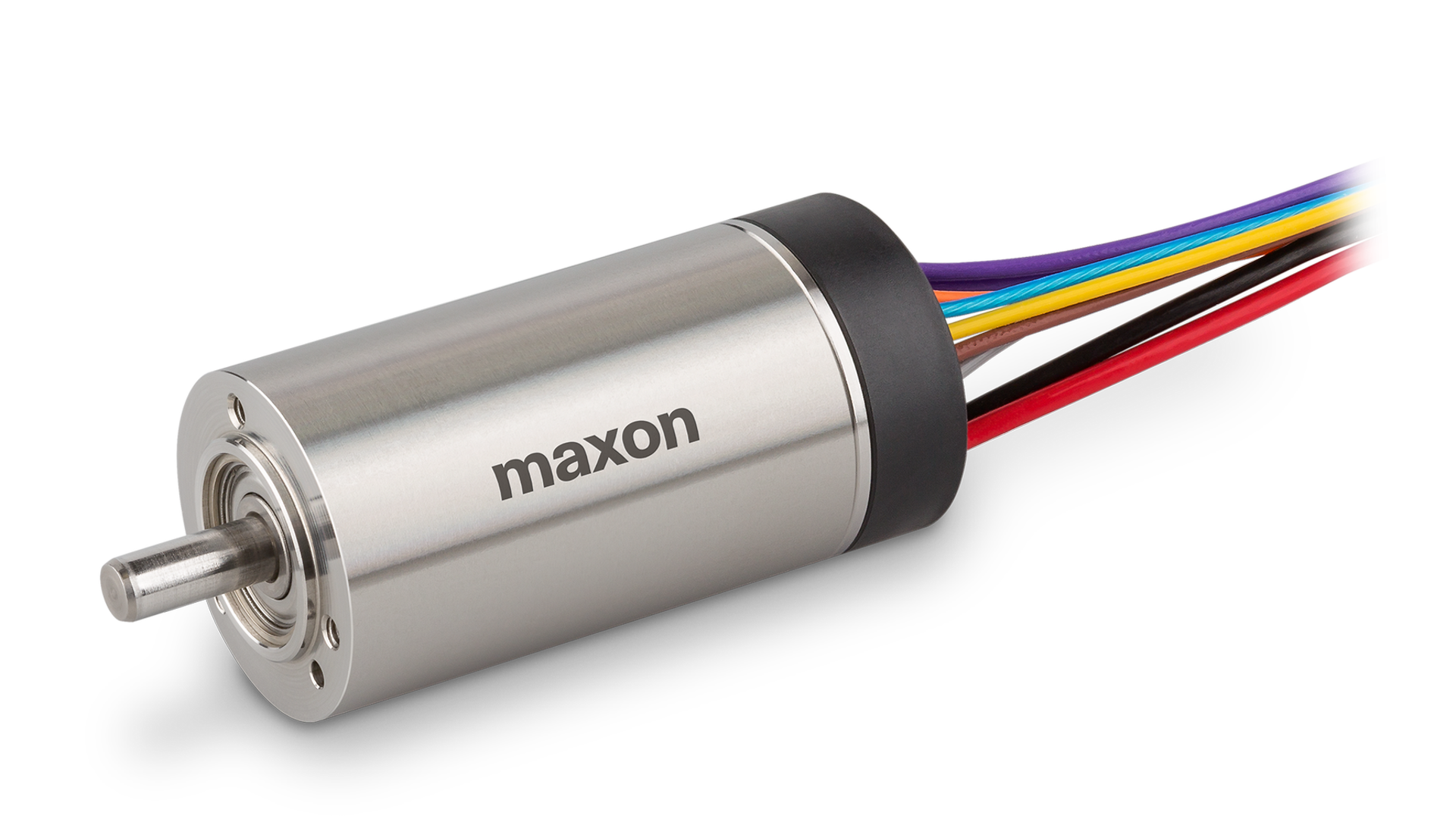
The UK’s growing data centre capacity and higher rack densities are increasing demand for liquid cooling. The pumps that circulate coolant need efficient, reliable motors designed for continuous operation. Amir Janjua, Sales Engineer at maxon UK & Ireland, explains what to consider when selecting a brushless DC (BLDC) motor for these systems.
Cloud computing, digitalisation, and now, rapid developments in AI, mean that the growth in data centres across the UK is booming. According to a recent report by construction data firm Barbour ABI, investment in the UK’s data centre infrastructure is forecast to rise to £10bn per year by 2029, a five-times increase on spend in just five years.
Alongside the increase in data centres, servers are becoming more powerful, and server rack power densities are growing. Reports suggest that today, average rack power densities in data centres are at around 17kW but are projected to reach as high as 30kW by 2027 due to AI workloads.
This increase requires server cooling technology that can maintain pace. Cooling is essential to prevent overheating, enabling servers to optimise performance and maintain uptime. Within this field, liquid cooling is taking prominence as the most efficient and effective solution compared to air-cooled approaches. By concentrating the coolant, liquid cooling also allows greater density of server racks to optimise efficient use of the data centre footprint.
Liquid cooling techniques
There are several approaches to liquid cooling, notably the direct-to-chip technique where heat transfers from the server’s microchips into cold plates that sit directly on the surface of each chip. Coolant flows through each cold plate removing the heat by forced convection before the liquid is re-cooled and allowed to re-start its circuit. In a similar way, in cold aisle cooling the coolant circulates through a cold plate that interfaces with the server rack rather than directly contacting the chips.
Alternatively, immersion cooling involves submerging the servers to remove heat directly from all components, not just CPUs or GPUs, with the coolant circulated to maintain the right temperature. Meanwhile, RDHx cooling (rear-door heat exchangers) combines air cooling with a liquid coolant that passes through a heat exchanger mounted on the rear of server racks, removing heat from the air as it exits the rack.
Whichever solution is used, the commonality across liquid-cooled server applications is the reliance on a centrifugal pump to provide smooth, continuous coolant flow. While their compact design makes them ideal for integration within rack enclosures, their low pulsation minimises vibration in proximity to sensitive components.
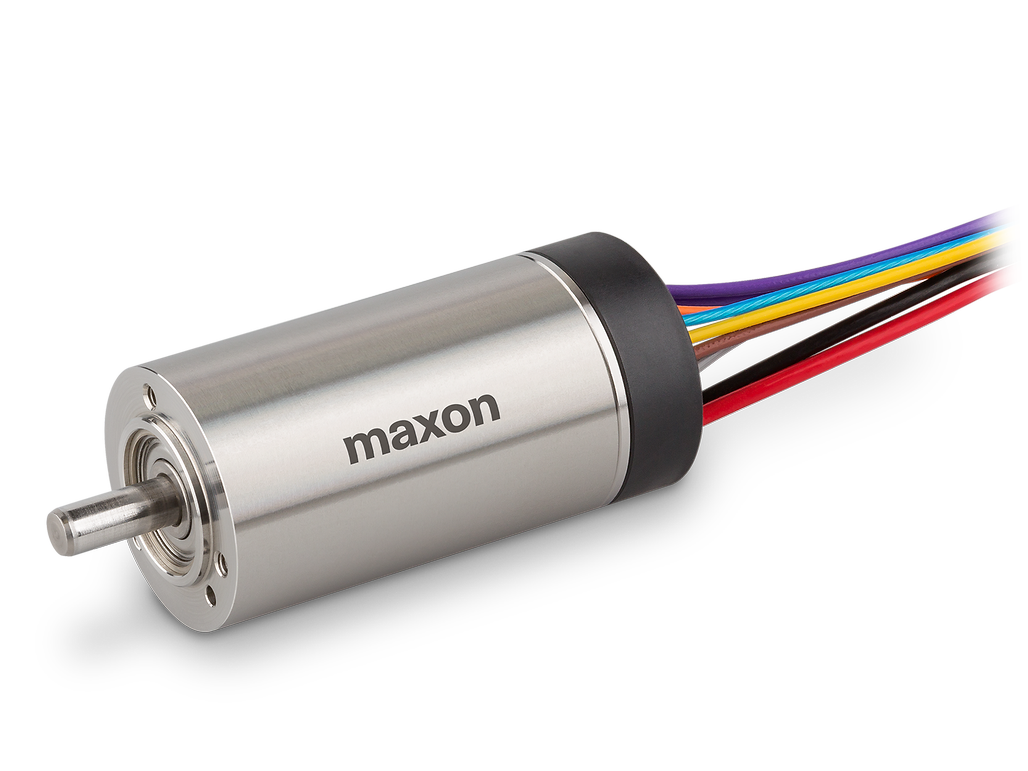
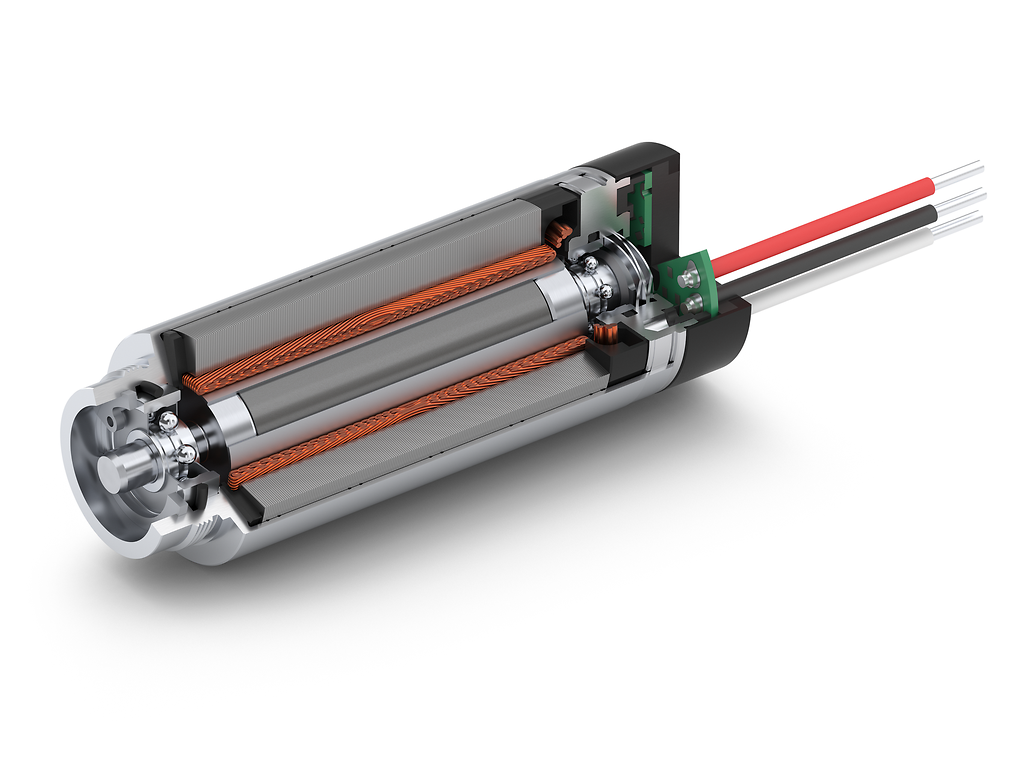
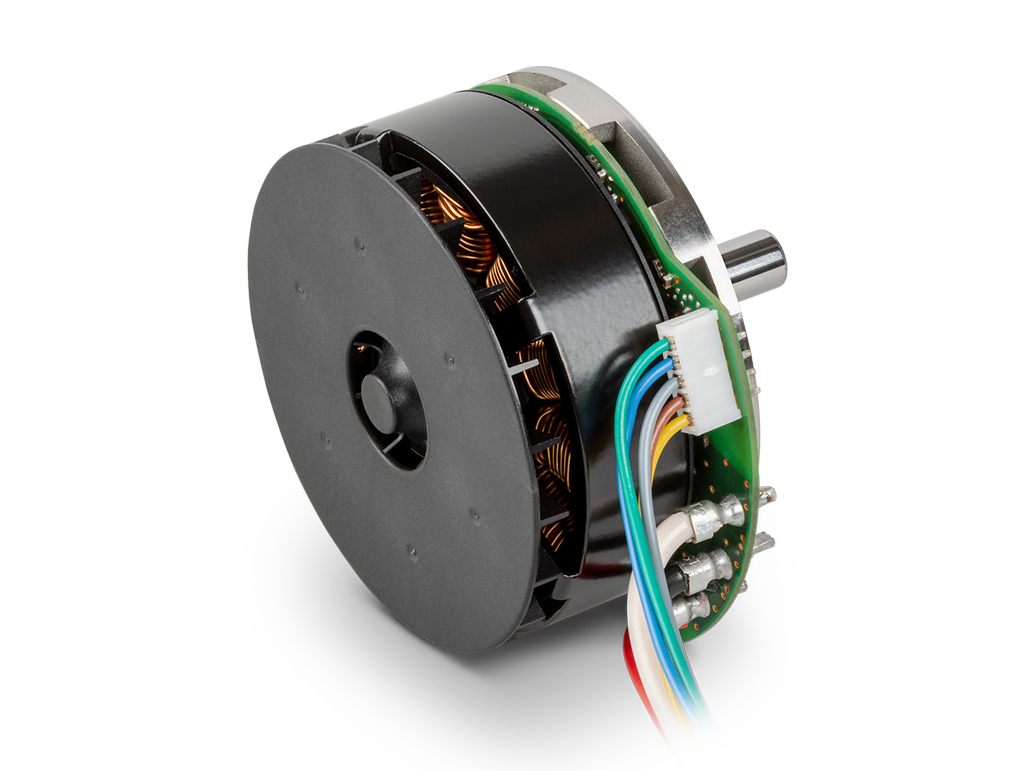
ECX BLDC motor
Why BLDC motors suit continuous cooling
To drive a centrifugal pump for a server cooling application, brushless DC (BLDC) motors are preferred, primarily as they provide longer lifetime compared to brushed DC motors. Relying on electronic commutation, BLDC motor designs don’t use brushes, which are inherent to the design of brushed DC motors, and while brushes wear out over time, electronic commutation doesn’t involve mechanical contact. In a data centre, where long-life durability is critical for 24/7 operation, downtime through replacement or failure of a brushed DC motor could damage server components or reduce performance.
A single centrifugal pump and BLDC motor pairing can manage the cooling of a server rack, plus an extra pump system for redundancy. To drive the pump, the duty cycle of the BLDC motor requires continuous duty at relatively low speed, and at relatively low torque, as the water-glycol coolant mix offers low viscosity and the system generally operates at lower pressures. To modulate coolant flow, demand peaks can be managed by pump impeller speed increases of less than 10%.
Designing for long-term reliability
While this kind of duty cycle may not sound demanding, the health of the servers relies on the continual performance of the BLDC motor, hence reliability is essential. Even if a motor’s thermal limits aren’t typically exceeded during its duty cycle, particularly as the motors are usually submerged in coolant, damage to its components resulting from continual heat exposure can lead to overheating over time, so an efficient design that maintains a low operating temperature is important.
The motor’s mechanical output, specifically the bearings, also require appropriate design to extend lifetime, and low-friction bearings manufactured with high-grade materials should be used. As the motors are submerged with coolant flowing through them, components including bearings must also be chemically compatible to prevent corrosion and enhance lifetime. While the bearings and rotor need to tolerate vibration without generating excess wear, the rotor should be precision-balanced to minimise the transmission of vibration to the server rack.
Matching the motor to the application
Accurate motor selection specific to the load and duty cycle is also crucial to achieve long-life reliability for 24/7 operation, as well as optimising energy efficiency. If we take two, well designed BLDC motors, both with the same size and performance, and both operating at the same torque output, but with a different winding, the motor with a winding designed to a higher voltage rating will have a lower current draw. This can reduce losses, making it more energy efficient.
While selection of the smallest motor to manage the required torque output is important to reduce procurement cost and footprint, a larger motor can operate at a lower thermal load and have lower winding losses, which can decrease energy use - and it will have a longer lifetime. Optimising motor design for energy efficiency is an art of balancing generation with dissipation. Overall, the specification of the motor must consider size, cost, efficiency, thermal performance and expected service life, dependent on the load and duty cycle.
Drive system specification for a BLDC motor also involves control requirements, which could range from a Hall sensor integrated to the BLDC motor for a fixed-speed application, or the addition of a controller to modulate the speed of the pump’s impeller. To achieve the most precise drive system specification, the surest, and certainly the fastest way, is to engage a specialist engineering team that can support selection specific to the demands of the application.
Integrating motors into pump systems
Pump manufacturers might choose to procure motor windings, magnets, and shafts separately to integrate within their designs. This approach typically reduces material cost, but it can add cost and internal resources in design and manufacture. And while many pump manufacturers successfully integrate motor components to create a reliable solution, installing a pre-engineered BLDC motor from a specialist manufacturer can optimise the performance and lifetime of a pump system overall.
While the expansion of data centres continues, with an even faster rise in the capabilities of servers, the demand for efficient and effective liquid cooling is rising to meet this challenge. This is putting greater reliance on the need for centrifugal pump technology, and with it, the need for more efficient and reliable BLDC motor designs.