maxon Story
Beyond visual line of sight: What’s next for the UK drone market?

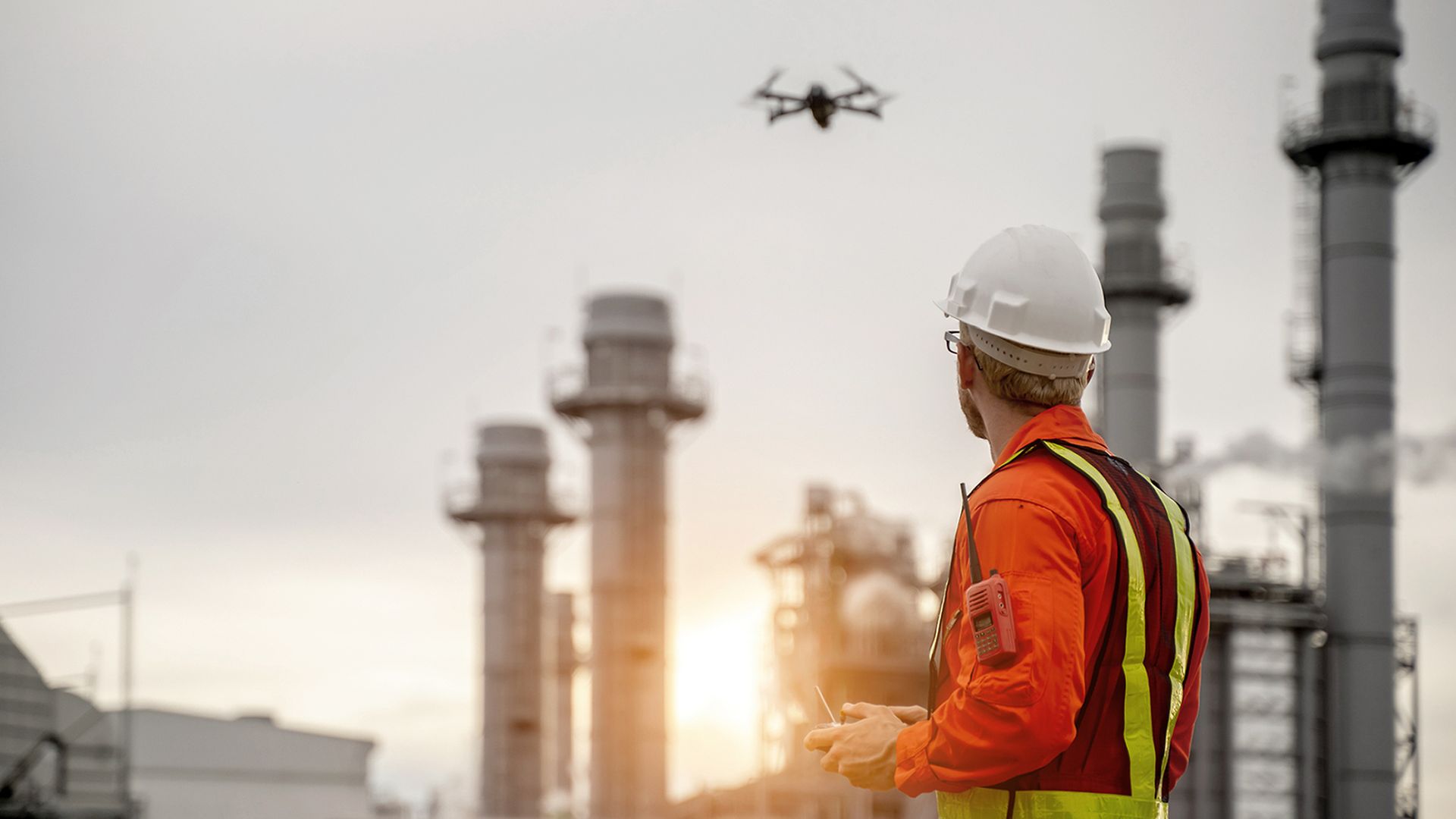
In the UK, the Civil Aviation Authority has a roadmap to expand the commercial use of drones with the potential to allow beyond visual line of sight flight. To achieve this, drone flight safety is set to become even more crucial, placing increased reliance on the reliability of propulsion systems. maxon’s engineering expert for aerospace applications, Andrew Gibson, explains.
In September 2025, the National Grid publicly announced the rollout of a centralised, autonomous aerial inspection capability of power lines using drones flown Beyond Visual Line of Sight (BVLOS), controlled remotely from a central control room. While there have been previous BVLOS trials in the UK, this is a significant step as it effectively enables long-distance drone flight for routine use.
Up to now, even drone flights to the Scottish islands have only been permitted using extended visual line of sight (EVLOS) permissions rather than beyond visual line of sight operation.
The National Grid case is not a one-off. Approval from the UK Civil Aviation Authority (CAA) to roll out Beyond Visual Line of Sight (BVLOS) flights has also been granted across nine rail routes covering 70km.
While these cases don’t signal widespread relaxation of the rules concerning BVLOS drone flight, 2025 has also seen the launch of the CAA’s BVLOS Roadmap, designed to enable UK innovators to unlock the potential for the commercial use of drones. The roadmap sets out a path for BVLOS operations in the UK by 2027.
Drone market growth
Despite regulatory caution, drone use has been steadily expanding in the UK over the past 18 months. Drone inspection of infrastructure and industry, in addition to power lines and railways, has ranged from wind turbines to construction developments. Across other sectors, notable examples of drone use include Guy’s and St Thomas’ Hospital in London with the transportation of urgent blood samples between hospital sites. Also used by wider national agencies, police forces now regularly deploy drones for observation and search, as do the Maritime and Coastguard Agency.
However, the sector with the highest potential for drone use, and the highest profile, is commercial deliveries. Considering the safety requirements for drones flying over populated urban areas, this type of use is also the most challenging for regulators. Steps are being made, though; the CAA’s BVLOS Roadmap has pledged to allow drone deliveries in villages, and although last mile deliveries to residential properties haven’t yet happened (trials have, however, taken place in Ireland), middle-mile delivery trials, from a hub to a sorting office, have taken place in Orkney.
Most notably, Amazon continues to show commercial ambitions for drone deliveries in the UK, which has already taken place in the US. In January, the company began test flights from its Darlington hub and expects to launch the service for real later this year, flying in deliveries weighing up to 5lbs to customers within two hours across a 7.5-mile area.
But despite the understandable hold-ups to widespread drone use resulting from the regulatory process to ensure safety, the outlook for the drone market in the UK is positive. Consultancy firm PwC projects that by 2030, drones could contribute up to £45bn to the UK economy, with as many as 900k drones in flight as a best-case scenario.
Lightweight drones
The highest contributor to the growth in the drone market is expected to be lightweight drones, including quadcopters, rather than larger fixed-wing designs. These drones are less expensive to make, easier to fly, and most importantly, they’re more flexible to a wider range of environments and scenarios. This includes operation in urban areas and the potential for last-mile deliveries.
As well as airframe development, the flight control system is key to drone design. This includes autopilot functions, important when the pilot is using on-board tools such as an inspection camera, or even a robotic arm, like the Invictus Robotics AERAS drone. Incorporating a navigation system and sensors, the flight control system is also critical for BVLOS flight.
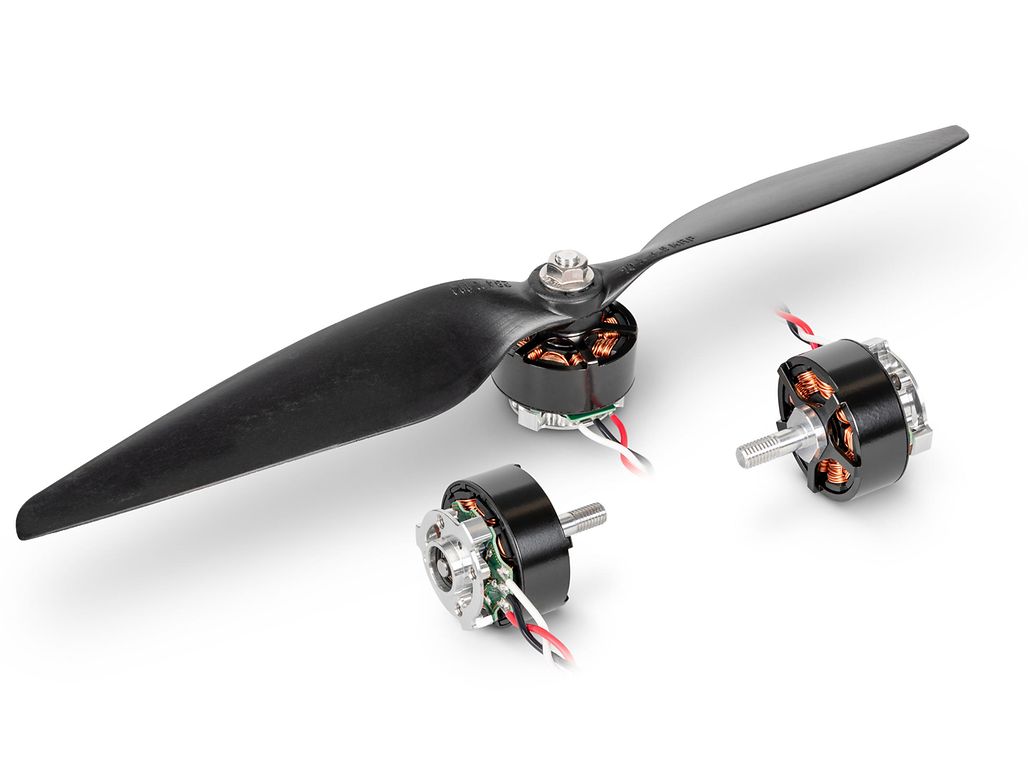
The maxon solution for drones: ECX 32 flat UAV
To power drones in flight, the propulsion system is also critical, comprising brushless DC (BLDC) motors, a speed controller, and propellers. Torque density is a pinnacle attribute, especially for lightweight drones. The more torque a motor can produce relative to its weight, the higher the payload it can carry, as the motor can drive a larger, more efficient propeller that generates more thrust.
Propulsion system enhancements
Torque density can also be increased by using a more efficient motor design with lower heat losses, enabling the drone developer to use a smaller, lighter motor to reach the same torque output. A more efficient motor also means lower draw on the battery, giving the key advantage of longer flight time.
BLDC motors are preferred to brushed DC motors as they achieve higher torque density and efficiency, and they also have a longer lifetime as they’re free of the mechanical brush contacts required for commutation. Flat BLDC motors, which are wider yet shorter than conventional designs, further increase torque density thanks to their larger diameter rotor.
The flat format also enhances cooling through improved heat dissipation. A recent enhancement to maxon’s flat BLDC motors for unmanned aerial vehicles includes a new, lighter weight, aerated, aluminium housing. While this new design reduces mass, it has also improved thermal efficiency, increasing power output by 15%.
To optimise flight performance, various aspects of propulsion system design must be considered, based on the drone’s design and its operational requirements. This could relate directly to the motors, such as the torque output or speed constant, as well as the power supplied from the batteries which determines speed and torque, through to the point of propulsion, with possibilities such as two counter-rotating propellers per axis to enhance lift. Within this system, the motor speed controller is also crucial to precisely modulate voltage and current. Its specification depends on aspects such as motor type, the number axes/motors that power the drone, as well as communications integration involving protocols such as DroneCAN.
Propulsion system development
The scale of considerations to reach the most effective propulsion system design could also require elements of customisation, such as modified windings fine-tuned for specific working points. Considering this range of design criteria, the assistance of specialised engineering expertise is usually the fastest and most effective approach for a drone developer to achieve the optimum propulsion system.
An additional advantage of involving propulsion system engineering input is the catalogue of test data that will be available in support. Proving the reliability of the propulsion system is critical, because for drone design, reliability means the same thing as safety. Alongside a propulsion redundancy overlap, the motors and controllers must be tested to withstand ingress and harsh environmental conditions, as well as vibration, shock, and crash safety, and ensure thermal management.
Testing drone drive systems to the RTCA DO-160 G Environmental Conditions and Test Procedures for Airborne Equipment standard demonstrates a robust approach. Static thrust and tilt testing carried out over a simulation is also important to reflect accelerated use over an entire service life of more than a million cycles.
Safety: increasingly critical
Across the drone projects that maxon has been involved with, NASA’s Ingenuity Mars mission has been one of the most demanding. maxon motors were integrated to actuate the swashplate, critical to change the pitch of the rotor blades. As the first aircraft to achieve powered, controlled flight on another planet, Ingenuity was originally intended to achieve six flights, but thanks to its durability, it finally completed 72 flights over nearly three years on Mars.
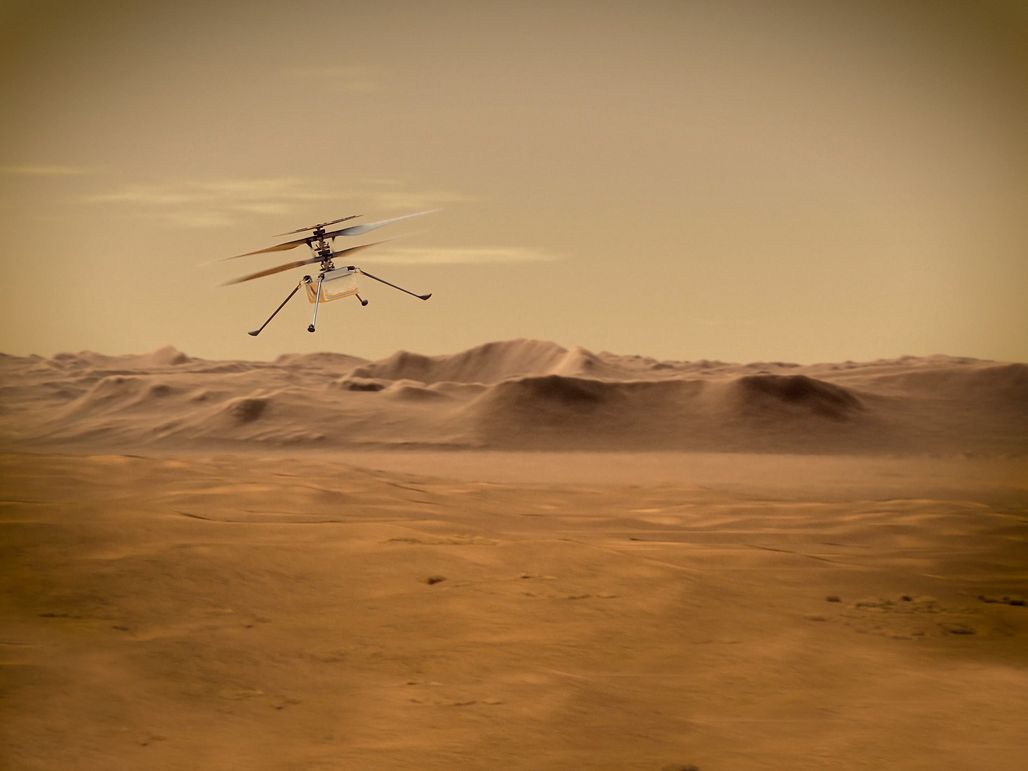
The NASA Ingenuity Mars Helicopter: maxon motors ensured the pitching of the rotors.
Not every drone design project faces the same environmental and operational demands as a NASA Mars mission, but for operation near people, the safety and reliability requirements can be just as important. If BVLOS regulations are updated, reliability requirements will become even more important to drone design, and as a result, so will the propulsion systems they rely on.
To find out more about propulsion system development for drones, visit here.