maxon Story
The motor as a sensor

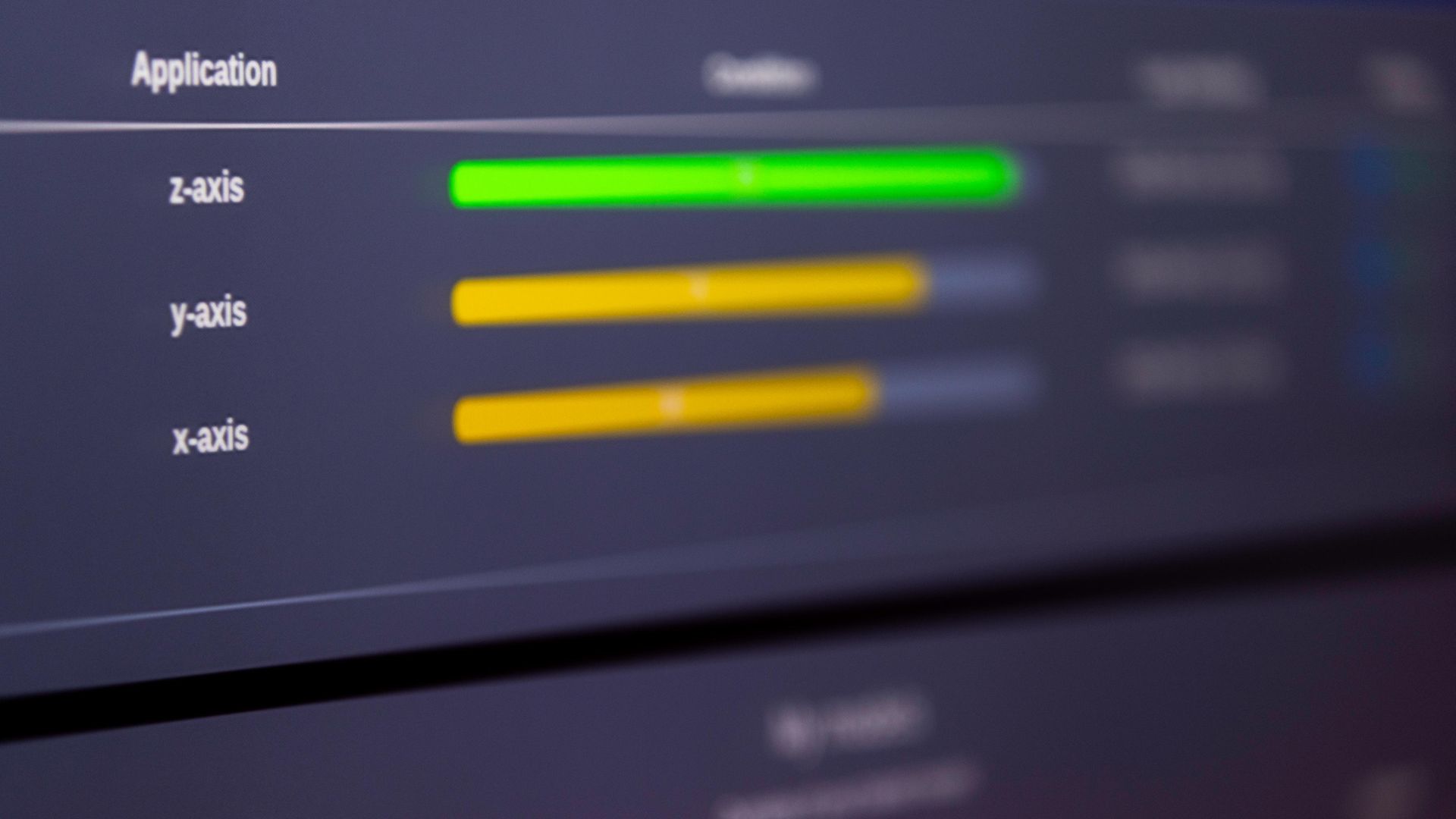
The motor as a source for monitoring the condition of a machine: that is the goal of maxon MIND (motion insights and diagnostics). The foundation for this is machine learning, physical expertise, and an open architecture. Claude Jaquemet, Business Development Manager Digital Business at maxon group, presents the system here.
In industrial drive technology, the motor has long been more than just an actuator. It provides valuable information about the condition of the entire system – provided you know how to interpret the data correctly. This is exactly where maxon’s new solution, maxon MIND (motion insights and diagnostics), comes in. The system uses motor signals to draw conclusions about the condition of the drive system and its environment. This turns the motor into the best sensor in the machine.
maxon MIND was developed to take condition monitoring and predictive maintenance to a new level. The solution analyzes data read from the controller during machine operation and detects patterns that indicate wear or malfunctions. It’s not just about monitoring the motor itself, but the entire drive system. This allows deviations to be detected early.
The possible applications are diverse. maxon MIND is particularly suitable for scenarios where unexpected failures must be detected early – such as increasing personnel safety or minimizing downtime. It also identifies issues that remain hidden in traditional tests.
In production lines with multiple machines in sequence, maxon MIND can help identify even the smallest deviations before they affect downstream processes. In addition, the system adds value in service operations for applications where the actual condition of the equipment is critical for maintenance planning.
Explainable, optimized AI
Technologically, maxon MIND is based on explainable artificial intelligence. This ensures that all diagnoses and predictions are traceable – a key requirement for safety-critical and highly regulated applications. The machine learning model developed by maxon also requires minimal data and can run on simple hardware. The advantage: minimally invasive integration into the application and low time investment for model training. Furthermore, the model does not require GPU infrastructure, which is a cost advantage for new developments. Retrofits in existing applications are also possible.
Data processing follows a clearly structured workflow. First, raw data is collected during machine operation. It is then preprocessed before entering the machine learning model. The model checks the data and analyzes any deviation from a healthy operating state. The result is then visualized in the frontend. Glassbox instead of black box: every processing step is traceable.
High prediction quality
A key feature of maxon MIND is the integration of domain-specific expertise into the model. The physical relationships of a mechatronic system flow directly into the modeling process. This achieves high prediction quality with minimal data requirements.
The system also learns from real-world applications: during machine commissioning, an initial state is recorded that describes the motor in the context of its environment. During operation, new data is regularly fed in and compared with the model. Depending on the application, this happens hourly, daily, or simply as needed.
Data quality plays a central role. To achieve valid results, the recorded signals must sufficiently represent the machine’s operating state. That’s why maxon works closely with customers to define suitable measurement cycles. These may include standardized motion sequences that reflect typical load situations. This creates a robust model tailored to the customer’s application.
An open platform
Data handling also plays an important role in maxon MIND. By default, data processing takes place in the cloud. Customers can view and download their data. No personal information is required, and all data can be anonymized by the customer.
The platform is designed to be open. Customers can access their data and integrate it into their system environment through an API. The solution is minimally invasive: existing motors, electronics, and controllers remain unchanged. The only requirement is installing a software package on the master controller that transmits data via, for example, the MQTT protocol. If the machine is already connected to the internet and the controller can acquire data, the system can be operational within a few days.
MIND
Learn more about maxon MIND
Download the maxon MIND brochure to explore our predictive maintenance solution in more detail.
In the market, maxon MIND positions itself as a highly specialized solution for demanding applications. maxon pursues a focused approach that deeply analyzes the physical properties of the drive system. This combination of technical focus, industrial robustness, and open architecture makes maxon MIND a solution that not only collects data but delivers real insights.
With maxon MIND, maxon brings a well-thought-out, technically sound solution to the market that turns the motor into an intelligent sensor. The combination of machine learning, physical expertise, and open system architecture makes the system a future-proof tool for industrial applications. The motor thus becomes not only a drive but a central element of condition monitoring – and therefore the key to greater efficiency, safety, and availability in Industry 4.0.